Best Times to Post on Social Media
“Post at 7pm on Tuesdays” gets repeated so often it’s basically folklore at this point. The real answer depends on your platform, your audience’s time zone, and what you’re actually trying to get out of the post. Here’s the honest version.
The best time to post on social media is whenever your specific audience is most active and engaged, which is usually – though not always – during weekday mornings, lunch breaks, and early evenings in your audience’s own time zone.
Quick Answer: Best Posting Times by Platform
| Platform | Best general window | Best days |
|---|---|---|
| 9-11am and 7-9pm | Tuesday – Thursday | |
| TikTok | 6-10pm | Any day, daily posting matters more |
| X (Twitter) | 8-10am and 12-1pm | Weekdays |
| YouTube | 2-4pm and 6-9pm | Weekends for entertainment content |
| 8-10am and midday | Tuesday – Thursday |
These are general starting points based on typical engagement patterns, not guarantees – your own account’s analytics will always be more accurate for your specific audience. The full breakdown below explains why.
Ask five different marketing blogs when to post and you’ll get five different answers, most of them copied from the same handful of studies that are years out of date by the time anyone quotes them. Platform algorithms shift constantly, and “best time to post” studies rarely account for niche, audience location, or what a platform’s algorithm is currently rewarding.
That said, there are real patterns worth knowing, and a few things worth understanding about why timing matters at all before chasing an exact hour.
Why Posting Time Actually Matters (And Why It Matters Less Than People Think)
Posting time matters because it determines how many of your existing followers see a post during the critical first hour or two, which most platforms use as a signal for how far to push that post afterward.
Most platforms use that early engagement – likes, comments, watch time, shares – as a signal for whether to keep pushing the post to more people. Post when your audience is scrolling and asleep at the algorithmic wheel, and you lose that early boost.
But timing is a multiplier, not a foundation. A mediocre post at the “perfect” time still underperforms a genuinely good post at an average time. Consistency and content quality matter more overall – timing is the fine-tuning layer you add once those are already solid, not a substitute for them.
General Peak Windows Across Platforms
Before getting platform-specific, a few patterns show up repeatedly across most social platforms and most industries:
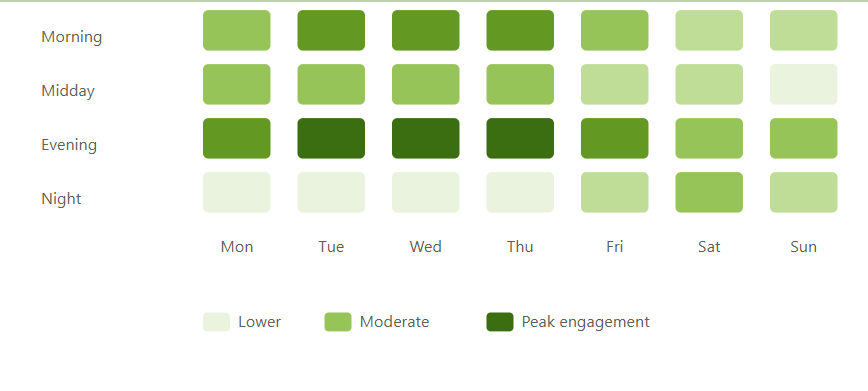
- Weekday mid-mornings (9-11am) tend to perform well – people check their phones after settling into work, during a coffee break, or a commute.
- Lunch hours (12-1pm) are a reliable secondary window.
- Early evening (6-9pm) tends to be strong across the board, once people are done with work and winding down.
- Weekends generally see lower overall activity for business and professional content, though lifestyle, entertainment, and personal brand content can do fine on weekends, sometimes better.
These are starting points, not rules. Where your specific audience actually lives, works, and scrolls will shift these windows.
Platform-by-Platform Breakdown
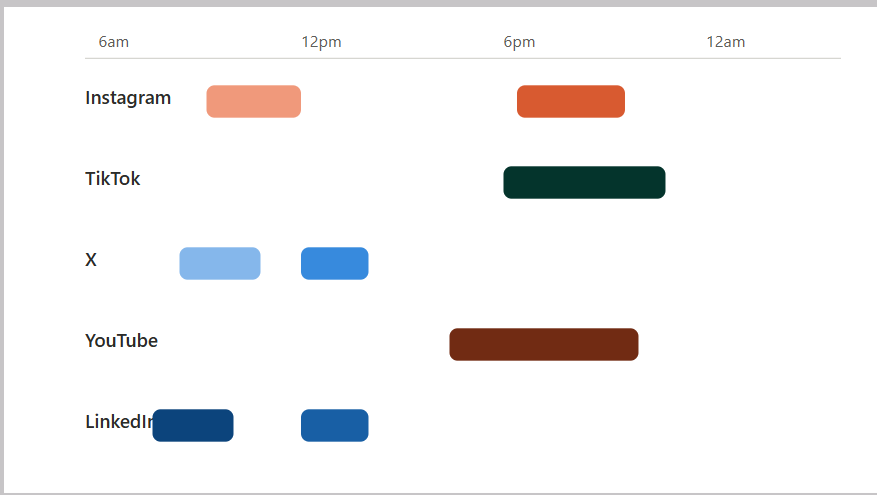
The best time to post on Instagram is generally 9-11am and 7-9pm on weekdays, with Tuesday through Thursday outperforming Monday and Friday. Instagram’s algorithm weighs early engagement heavily for Reels especially, so timing when your specific followers are active matters more here than almost anywhere else. Reels in particular seem to get a longer discovery window than static posts, so a slightly off-peak post that’s genuinely good can still find its audience over the following days.
TikTok
The best time to post on TikTok is generally 6-10pm, though consistent daily posting matters more than hitting an exact hour. TikTok’s For You Page algorithm cares far less about the exact posting minute than Instagram’s does – a good TikTok can go from a handful of views to hundreds of thousands days after it was posted.
X (formerly Twitter)
The best time to post on X is generally 8-10am and 12-1pm on weekdays. X moves fast, and posts have a short effective lifespan compared to other platforms – often just a few hours before they’re buried under newer content. Posting multiple times a day works better here than on most other platforms, precisely because each individual post has such a short shelf life.
YouTube
The best time to post on YouTube is generally 2-4pm and 6-9pm, with weekends performing especially well for entertainment content. YouTube rewards watch time more than any single metric, and it takes longer for the algorithm to “decide” how far to push a video – sometimes days. Uploading a few hours before your audience’s typical peak viewing window gives the algorithm time to start surfacing the video before that window even hits.
The best time to post on LinkedIn is generally Tuesday through Thursday, 8-10am and again around midday. LinkedIn is the outlier here – it’s fundamentally a weekday, work-hours platform, since people check it during work breaks rather than evenings or weekends. Posting on Friday afternoons or over the weekend generally underperforms significantly.
Why “Best Time” Studies Disagree So Much
If you’ve noticed conflicting advice across different sources, it’s not because someone’s wrong – it’s because “best time” genuinely varies by:
Audience location. A U.S.-based audience and an Indian audience are not awake and scrolling at the same clock time, obviously, but plenty of generic “best time” studies quietly assume one time zone and don’t say so.
Niche. B2B content follows work-hour patterns. Entertainment and lifestyle content follows leisure-hour patterns. A study averaging across every niche produces a number that fits nobody’s actual audience well.
Follower size and engagement habits. Smaller, tightly engaged audiences respond differently than huge, passive ones. What “works” for a mega-account with millions of loosely connected followers doesn’t necessarily transfer to a smaller, focused account.
Algorithm changes. Every platform tweaks its ranking signals regularly, and posting-time studies go stale faster than most people realize.
This is why a generic “post at 7pm” rule is a reasonable starting point but a poor long-term strategy.
How to Actually Find Your Best Posting Time
The generic windows above are a decent starting point if you have no data yet. But the most reliable answer is always in your own account’s analytics, not a blog post – including this one.
On most platforms:
- Check your platform’s built-in analytics (Instagram Insights, TikTok Analytics, YouTube Studio, X Analytics, LinkedIn Analytics) for “when your audience is active” – most platforms now surface this directly.
- Look at your last 15-20 posts and compare performance against posting time, not just posting day. Patterns usually show up faster than people expect.
- Test deliberately for a few weeks – post at two or three different times and actually compare results rather than guessing from memory.
- Re-check every few months. Audiences shift, algorithms shift, and a posting schedule that worked six months ago can quietly stop working without an obvious signal.
Posting Frequency Matters Alongside Timing
Getting the hour right on a single weekly post won’t move the needle much if the overall posting frequency is too low for the platform. Each platform has a rough baseline where content actually gets a fair shot at the algorithm:
TikTok and X reward frequent posting – multiple times a day for X, at least once a day for TikTok if you’re aiming for real growth. Instagram and YouTube reward steady, sustainable frequency over sheer volume – a few times a week, consistently, tends to outperform sporadic daily bursts followed by silence. LinkedIn sits in between, where a few solid posts a week during work hours generally beats posting daily with thinner content.
Timing tells the algorithm when to give a post its first push. Frequency tells the algorithm whether your account is worth pushing at all. Both matter, and neither one fixes the other’s absence.
If figuring out a realistic, platform-specific posting cadence for your niche feels like a lot to manage alongside everything else, this is exactly the kind of scheduling and content strategy work ViralFry builds into ongoing client management – so posting times aren’t a guess, they’re based on your actual audience data.
Common Mistakes With Posting Time
Copying a generic “best time” chart without ever checking whether it matches your own audience’s actual activity. Posting at the “perfect” time but with inconsistent frequency, which undercuts any timing advantage almost entirely. Ignoring time zone differences when a meaningful chunk of the audience is somewhere else. And treating posting time as fixed forever, instead of something to periodically re-check as the audience and algorithm both shift.
Frequently Asked Questions
Is there one single best time to post across all social media platforms?
No. Peak windows differ by platform, largely because each platform’s audience uses it differently throughout the day – LinkedIn skews toward work hours, TikTok and Instagram skew toward evenings, X spreads more evenly across the workday.
Does posting time matter more than content quality?
No. Timing affects the initial push a post gets, but content quality and relevance to the audience determine whether that push turns into sustained reach. A strong post at an average time consistently outperforms a weak post at a perfect time.
How often should I check my own best posting times?
Every two to three months is a reasonable baseline, or sooner if you notice a sudden, unexplained drop in reach – that’s often a sign either the algorithm shifted or the audience’s habits did.
Should I post at different times on different platforms?
Generally, yes. Cross-posting the exact same content at the exact same time across every platform ignores that each one has a different peak usage pattern – what works on LinkedIn at 9am on a Tuesday is rarely the same window that works best on TikTok.
Want a posting schedule actually built around your audience’s real activity instead of a generic chart? ViralFry handles content strategy and scheduling for creators and brands across platforms. Get in touch to talk through what would work for your specific audience.
Add as Preferred Source