Ten SEO experts shaping how the industry understands AI search and GEO are Lily Ray, Aleyda Solis, Kevin Indig, Mike King, Rand Fishkin, Marie Haynes, Glenn Gabe, Barry Schwartz, Cyrus Shepard, and Britney Muller. Each brings a different lens: algorithm analysis, technical depth, strategic research, industry news, or practical understanding of AI models.
AI search is moving faster than any official documentation. The people below publish research, share data, and explain changes in public, which makes them some of the best free teachers in the field. This is not a ranking; it is a list of voices we read regularly and recommend. For more names, see our guides to the best SEO professionals to follow and the voices of Google Search.
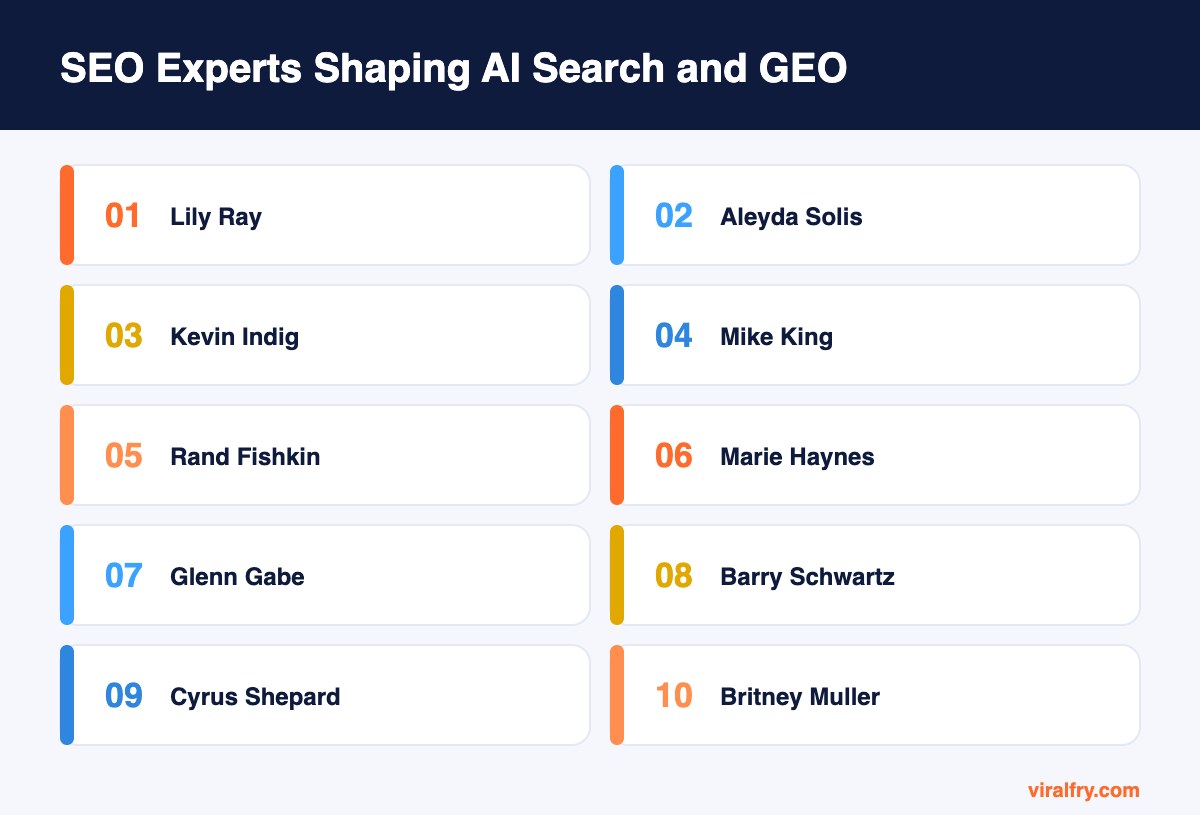
Who Are the SEO Experts Shaping AI Search and GEO?
1. Lily Ray
Lily Ray is one of the most widely followed voices on Google algorithm updates, E-E-A-T, and how AI search is changing visibility. She regularly shares data on which sites win and lose after core updates and has been vocal about the quality problems AI-generated content creates.
Why follow her: practical, evidence-driven commentary on what Google rewards, and early analysis of how AI Overviews affect traffic.
2. Aleyda Solis
Aleyda Solis is an international SEO consultant and founder of Orainti, known for her SEOFOMO newsletter, Crawling Mondays videos, and free learning resources. She has published extensive guidance on AI search optimization, including checklists that connect classic SEO with AI visibility.
Why follow her: clear, actionable frameworks, especially for technical and international SEO in an AI-first world.
3. Kevin Indig
Kevin Indig writes the Growth Memo newsletter and has led SEO and growth at well-known tech companies. He publishes research on how AI Overviews and LLMs affect clicks, how users interact with AI results, and how brands should adapt.
Why follow him: data-heavy analysis that helps leaders make strategic decisions rather than chase tactics.
4. Mike King
Mike King is the founder of iPullRank and one of the most technical voices in SEO. He has written in depth about how Google’s systems and AI retrieval work, and has championed the idea of “relevance engineering” for AI search.
Why follow him: deep explanations of the technology behind search and AI, translated into strategy.
5. Rand Fishkin
Rand Fishkin co-founded Moz and later SparkToro. He has long highlighted the rise of zero-click search and argues that brands must build audience and recognition beyond Google.
Why follow him: a big-picture view of discovery across platforms and why brand demand matters more when AI answers reduce clicks.
6. Marie Haynes
Marie Haynes is known for her work on Google quality, the Search Quality Rater Guidelines, and recovery from algorithm updates. In recent years she has written extensively about how AI is transforming search and how Google’s systems evaluate helpfulness.
Why follow her: thoughtful analysis of quality signals and how AI changes what “helpful” means.
7. Glenn Gabe
Glenn Gabe of G-Squared Interactive is a go-to analyst for major algorithm updates. His detailed case studies show patterns in sites that rise or fall, including how AI features and new SERP layouts affect performance.
Why follow him: careful, real-world update analysis that cuts through speculation.
8. Barry Schwartz
Barry Schwartz runs Search Engine Roundtable and has documented search industry news daily for many years. When Google launches or tests an AI feature, he is usually among the first to report it.
Why follow him: the fastest way to know what changed in Google Search and AI features this week.
9. Cyrus Shepard
Cyrus Shepard, founder of Zyppy, is known for clear ranking studies and practical experiments, such as research on title rewrites and on-page factors. He shares accessible insights on what actually moves rankings.
Why follow him: testable, practical SEO lessons explained simply.
10. Britney Muller
Britney Muller is known for making machine learning and large language models understandable to marketers. She teaches how AI models work, where they fail, and how to use them responsibly.
Why follow her: a grounded understanding of AI that helps SEOs separate hype from reality.
What Is Each Expert Best Known For?
| Expert | Best known for |
|---|---|
| Lily Ray | Algorithm updates, E-E-A-T, AI search impact |
| Aleyda Solis | International and technical SEO, AI search checklists |
| Kevin Indig | Growth Memo research on AI and clicks |
| Mike King | Technical depth, relevance engineering |
| Rand Fishkin | Zero-click search, audience research |
| Marie Haynes | Quality guidelines, helpfulness, AI |
| Glenn Gabe | Algorithm update case studies |
| Barry Schwartz | Daily search industry news |
| Cyrus Shepard | Ranking studies and experiments |
| Britney Muller | Explaining AI and machine learning |
What Are These Experts Saying About AI Search?
While their views differ in detail, several themes come up again and again: classic SEO foundations still matter because AI systems retrieve from search indexes; clicks from informational queries are under pressure; brand recognition and mentions are becoming more important; and content needs genuine expertise and original information to stand out. Many also urge caution about tactics that promise guaranteed AI visibility. Our own take is in SEO vs GEO and the top GEO strategies.
How Should You Use Expert Advice?
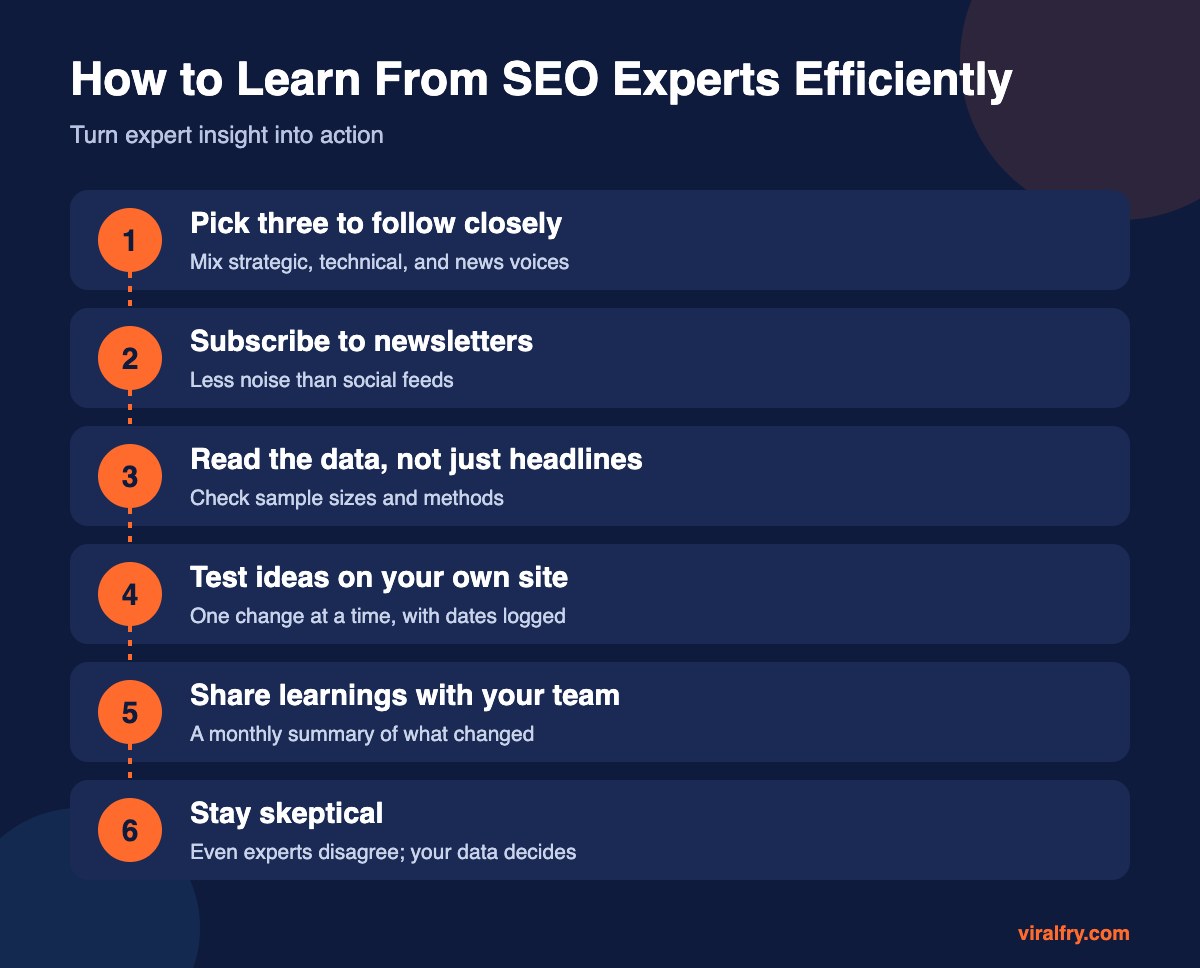
Treat expert insight as a hypothesis, not a rule. Every site is different, and even respected experts sometimes disagree. Read their reasoning and data, then test changes on your own pages, log the date, and measure the result. Over time, you will build your own evidence about what works for your audience.
Where Can You Follow These Experts?
- Newsletters, which tend to offer the most depth with the least noise
- Conference talks and recordings from events such as BrightonSEO, SMX, and MozCon
- LinkedIn and X for quick updates and discussions
- Podcasts and video channels for longer conversations
How Do You Build Your Own Expertise in AI Search?
Following experts is a start, but expertise comes from doing. Pick twenty questions your customers ask, check how AI tools answer them each month, and record which sources they cite. Restructure one of your pages based on what you learn and compare the results. Write up your findings, even internally. In six months you will have first-hand evidence that most of your competitors lack, and that experience is exactly what search engines and AI systems increasingly reward.
Key Takeaways
- These ten voices offer different lenses on AI search and GEO.
- Follow a mix of strategic, technical, and news-focused experts.
- Common themes: fundamentals still matter, brand matters more, originality wins.
- Test expert ideas on your own site before adopting them widely.
Frequently Asked Questions
Who is the best SEO expert for AI search?
There is no single best expert. Lily Ray, Aleyda Solis, Kevin Indig, and Mike King are among the most widely followed for AI search topics, each with a different focus.
What is GEO in SEO?
GEO, or generative engine optimization, is the practice of earning mentions and citations in AI-generated answers from tools like ChatGPT, Perplexity, Gemini, and Google AI Overviews.
How can I learn about AI search optimization?
Follow experts’ newsletters, read official documentation from Google and AI companies, study case studies, and test changes on your own site.
Do SEO experts agree on how AI search works?
They agree on many fundamentals but differ on details and priorities. Because AI search changes quickly, testing on your own site is essential.
Add as Preferred Source