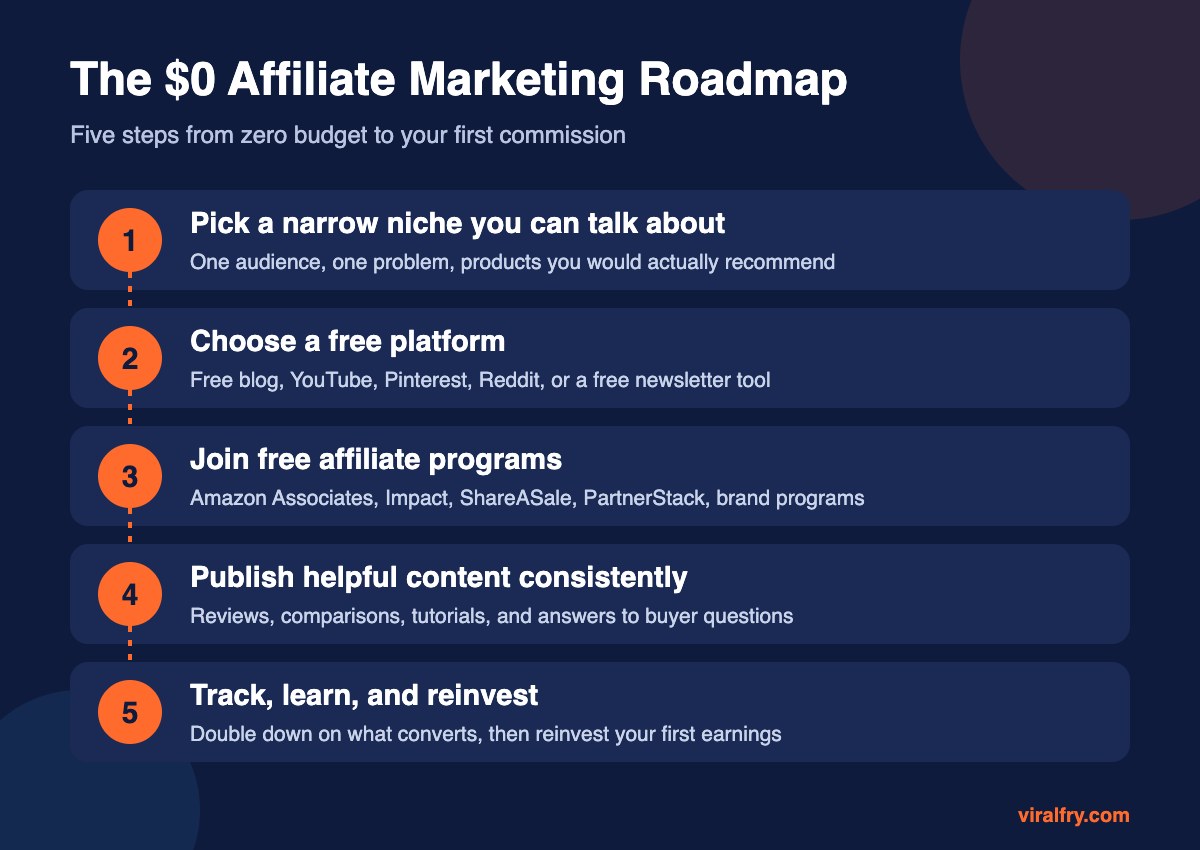
Short answer: you can start affiliate marketing with no money by picking a narrow niche, publishing helpful content on a free platform (a free blog, YouTube, Pinterest, Reddit or a free newsletter), joining free affiliate programs, and disclosing your links. What you invest instead of cash is time: expect three to six months of consistent publishing before commissions become predictable.
Most “start with $0” advice either oversells passive income or quietly assumes you will buy a domain, hosting, and a course. This guide sticks to what you can do today with zero budget, what each free option costs you in reach or control, and when it makes sense to spend your first dollar.
Can You Really Start Affiliate Marketing With No Money?
Yes. Joining an affiliate program is free, and so are the platforms where you can publish recommendations. Merchants pay you a commission when someone buys through your tracked link, so you never hold inventory, ship products, or pay upfront fees.
The trade-off is that free platforms give you less control. A free blog subdomain ranks slower than your own domain, social reach depends on an algorithm, and some programs want to see a real audience before they approve you. None of that blocks you from starting. It just shapes which channel you pick first. If you are new to the model, read our explainer on what affiliate marketing is for influencers before you go further.
How Do You Pick a Niche That Can Actually Earn?
Your niche decides everything else: which programs approve you, what content you write, and how much each sale is worth. A good zero-budget niche passes three tests:
- You can create content about it for a year. If you run out of ideas in a month, the niche is too thin or too boring for you.
- People buy things to solve the problem. “Home espresso for beginners” has products at every price point. “The history of coffee” mostly does not.
- There is room for a specific angle. “Fitness” is crowded. “Strength training for desk workers over 40” gives you a clear reader and clear products.
A quick validation trick: search your niche plus “best”, “vs” and “review” on Google and YouTube. If you see plenty of results from small creators, not just giant publishers, there is demand and room for you.
Which Free Platforms Work Best for Beginners?
You do not need a paid website on day one. Each free channel below has a different speed and ceiling, so choose the one that matches how you like to create.
| Platform | Cost | Best for | Main limitation |
|---|---|---|---|
| Free blog (WordPress.com, Blogger, Medium) | $0 | Long-form reviews and tutorials that rank in search | Less SEO control and some platforms restrict affiliate links |
| YouTube | $0 | Product demos, comparisons, “how I use it” videos | Takes time to build watch history and subscribers |
| $0 | Home, fashion, food, DIY and gift niches | Needs good visuals and consistent pinning | |
| Reddit and Quora | $0 | Answering buyer questions in your niche | Strict self-promotion rules; value first, links rarely |
| Free newsletter (Substack, beehiiv free tier) | $0 | Owning your audience from day one | Slower to grow without another traffic source |
| Instagram and TikTok | $0 | Visual products and personality-led niches | Link placement limits and algorithm volatility |
Our recommendation for most beginners: pick one search-driven channel (a free blog or YouTube) for long-term traffic, and one social channel for faster feedback. Doing six platforms badly is the most common reason people quit.
Which Affiliate Programs Can You Join for Free?
Every legitimate affiliate program is free to join. If a “program” asks you to pay to become an affiliate, treat it as a red flag. Good starting points:
- Amazon Associates: easy approval and a huge catalog, but low commission rates in many categories, short cookie windows, and you need qualifying sales within your first 180 days to stay in.
- Affiliate networks such as Impact, ShareASale (Awin), CJ, and Rakuten Advertising: one sign-up gives access to hundreds of brands.
- SaaS and B2B programs via PartnerStack or direct brand pages: often recurring commissions, which suit tech, marketing, and business niches.
- Direct brand programs: look for an “Affiliates” or “Partners” link in the footer of products you already use.
- Digital product marketplaces such as ClickBank or Gumroad affiliates: higher percentages, but vet product quality carefully.
Want to compare earning potential before you commit? Our guide to proven strategies to improve affiliate marketing earnings covers how commission rate, cookie length, and average order value interact.
What Content Should You Create First?
Start with content that catches people close to a buying decision. These formats convert best for new affiliates because the reader already wants a recommendation:
- “Best X for Y” lists (for example, “best budget microphones for beginner podcasters”).
- Head-to-head comparisons (“Product A vs Product B”).
- Honest single-product reviews with pros, cons, and who should skip it.
- Tutorials that use a product (“How to edit a podcast in Descript”).
- Answers to specific buyer questions (“Is X worth it for small teams?”).
Write for one reader with one problem per piece. Show real use where possible: your own photos, screenshots, or results. That first-hand evidence is what separates a trustworthy review from the hundreds of thin, rewritten ones, and it is what search engines and AI answer engines increasingly reward.
How Do You Get Traffic Without Paying for Ads?
Free traffic comes from two places: search and community. Search is slower but compounds. Community is faster but needs constant effort.
- Target low-competition keywords. Long, specific questions are easier to rank for. Our guide on how to choose keywords for SEO walks through the process with free tools.
- Answer questions where your audience already hangs out. Reddit threads, Quora, Facebook groups, and niche forums. Give a complete answer first; only link when it truly helps.
- Repurpose every piece. Turn one blog post into a short video, three pins, and a newsletter issue.
- Post when your audience is active. See our breakdown of the best times to post on social media.
- Interlink your own content so readers and crawlers move from informational posts to your buying guides.
Do You Need to Disclose Affiliate Links?
Yes. In the United States, the FTC expects a clear and conspicuous disclosure whenever you have a material connection to a brand, and that includes earning a commission. Put a plain-language line near the top of the content and close to the link, such as “I may earn a commission if you buy through links on this page, at no extra cost to you.” On video and social, say it out loud or on screen and use the platform’s paid-partnership tools where available. Hiding the disclosure in a footer is not enough.
Most programs also have their own rules. Amazon, for example, requires specific wording and restricts how prices are shown. Read each program’s terms before you publish.
When Should You Start Spending Money?
Spend your first money only after you have proof that something works. A sensible order:
- Your own domain and basic hosting once you have 10 to 20 published pieces and know the niche sticks. Your content and rankings become an asset you own.
- An email tool upgrade once your free list outgrows the free tier.
- A keyword or SEO tool once you are publishing weekly and need better topic data.
- Paid ads last, and only to pages that already convert from organic traffic.
Reinvesting your first commissions this way keeps the business self-funded and removes most of the risk.
What Mistakes Should Beginners Avoid?
- Promoting products you have never researched or used.
- Joining a dozen programs before publishing anything.
- Spamming links in comments, groups, or DMs.
- Chasing the highest commission instead of the best fit for your reader.
- Quitting at month two. Most affiliate sites see little traction before months three to six.
- Skipping disclosures or ignoring program terms.
Key Takeaways
- You can start affiliate marketing with $0 using free platforms and free programs.
- A narrow niche with real buying intent matters more than the platform you pick.
- Buying-intent content (best lists, comparisons, honest reviews) converts first.
- Free traffic comes from search and community; expect three to six months to see momentum.
- Always disclose affiliate links clearly, then reinvest early earnings into a domain and tools.
Frequently Asked Questions
How much can a beginner earn from affiliate marketing with no money?
Most beginners earn little or nothing in the first two to three months. With consistent publishing in a buying-intent niche, a few hundred dollars a month within the first year is a realistic goal; larger incomes usually take longer and come from search traffic that compounds.
Can I do affiliate marketing without a website?
Yes. You can share affiliate links on YouTube, Pinterest, a free newsletter, or social profiles, as long as each program allows that channel. A website becomes valuable later because it is the one asset you fully control.
Is Amazon Associates good for beginners?
It is easy to join and trusted by shoppers, which makes it a good learning program. The downsides are low commission rates in many categories, a short cookie window, and the requirement to make qualifying sales within 180 days of joining.
How long does it take to make the first affiliate sale?
With social or community traffic, some people see a first sale within weeks. With SEO-led content, three to six months is more typical because new pages take time to rank.
Do I need to pay for an affiliate marketing course?
No. Everything you need to start is available for free in program help centers, platform guides, and blogs. Consider paid training only after you have published consistently and know exactly which skill you need to improve.
Add as Preferred Source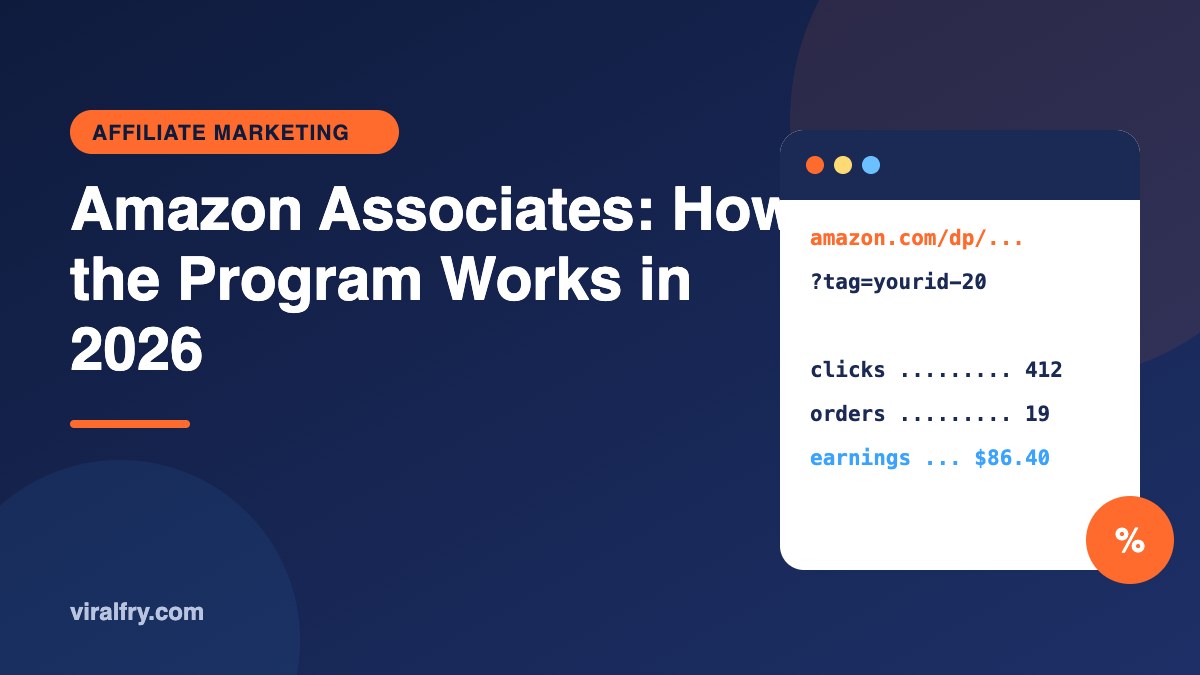
1 thought on “How to Start Affiliate Marketing With No Money: A Practical Beginner Guide”