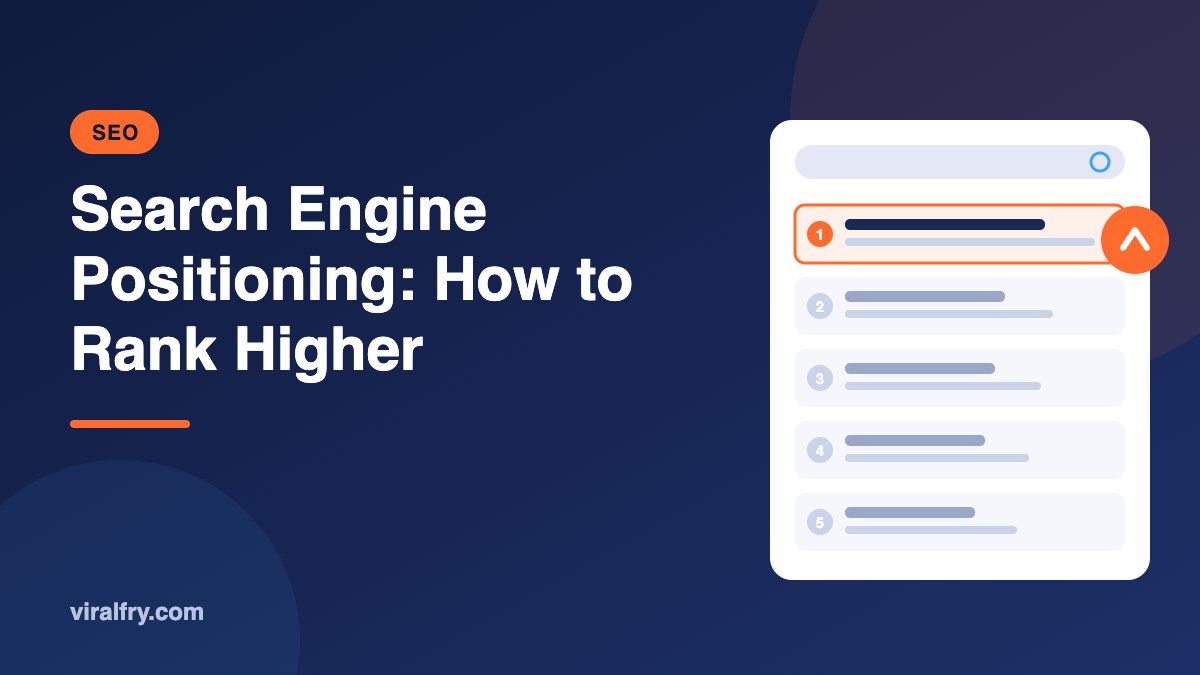
Short answer: search engine positioning is the practice of improving where a specific page appears in search results for a specific query. You improve it by tracking current positions, matching search intent, fixing technical issues, strengthening content with real expertise, earning relevant links, and optimizing for SERP features such as featured snippets and AI Overviews. It is a narrower, page-level focus within SEO.
Plenty of businesses rank for something. The real question is whether your most valuable pages appear in the top few results for the queries that bring customers. That is what search engine positioning is about.
What Is Search Engine Positioning?
Search engine positioning means deliberately moving individual pages up the rankings for chosen keywords. Where SEO covers your entire site and strategy, positioning zooms in: one page, one target query, one goal position. A typical positioning project might aim to move a pricing comparison page from position 9 to the top 3.
If you are new to the broader discipline, our explainer on what SEO optimization means covers the fundamentals.
How Is Search Engine Positioning Different From SEO?
| SEO | Search engine positioning | |
|---|---|---|
| Scope | Whole site and strategy | Specific pages and keywords |
| Goal | More qualified organic traffic overall | A target position for a target query |
| Typical work | Site architecture, content strategy, technical health, authority | Intent match, on-page upgrades, internal links, links to the page |
| Measured by | Organic sessions, conversions, visibility | Average position, top-3 and top-10 counts, CTR |
Why Does Search Position Matter So Much?
Clicks concentrate at the top of results. Studies of click-through rate consistently show the first organic result earns far more clicks than position five or ten, and very few searchers reach page two. AI Overviews and other SERP features now push organic results lower, which makes holding a top spot, or being cited inside those features, even more valuable.
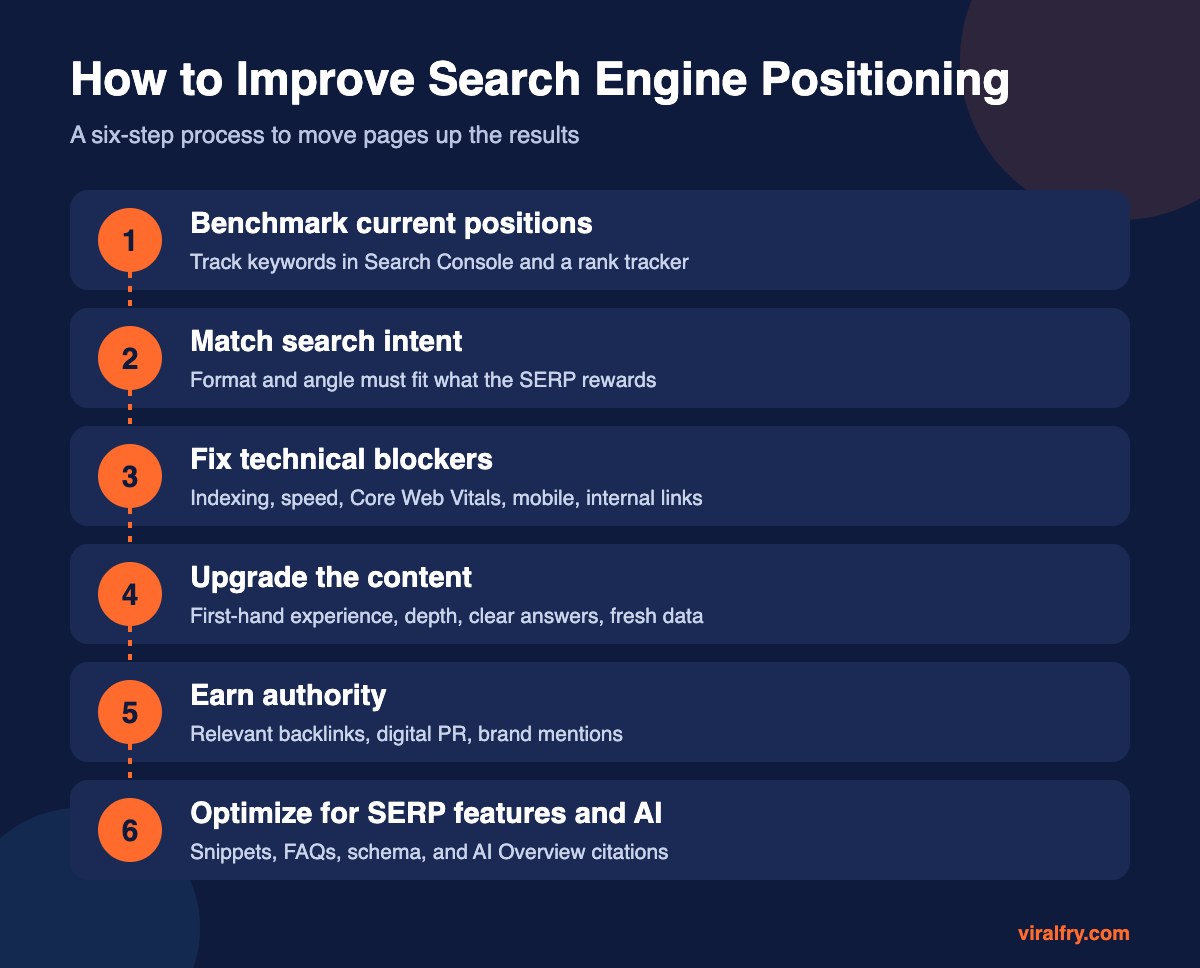
How Do You Benchmark Your Current Search Positions?
- Use Google Search Console’s Performance report to see average position, impressions, and CTR per query and page.
- Set up a rank tracker for your priority keywords so you see daily or weekly movement by location and device.
- Group keywords by page so you know which URL should rank for each query and spot cannibalization.
- Flag “striking distance” keywords in positions 4 to 20. These usually move fastest.
How Do You Match Search Intent for Better Positioning?
Search the keyword yourself and study the top results. Are they guides, product pages, lists, tools, or videos? What questions do they answer? If the top ten are all step-by-step guides and your page is a sales page, no amount of optimization will close the gap. Match the dominant format, then beat it on depth, clarity, and originality.
What Technical Fixes Improve Search Engine Positioning?
- Confirm the page is indexed and the canonical is correct
- Improve load speed and Core Web Vitals, especially on mobile
- Make sure important content renders without relying on blocked scripts
- Add internal links from relevant, authoritative pages using descriptive anchor text
- Fix broken links, redirect chains, and duplicate titles
- Add structured data that fits the page, such as Article, Product, or FAQ
How Do You Upgrade Content to Outrank Competitors?
- Answer the query in the first paragraph, then expand.
- Show first-hand experience: screenshots, data, examples, and named authors with real credentials.
- Cover the subtopics searchers expect, using clear question-based headings.
- Refresh outdated facts and update the date only when you make real changes.
- Improve the title tag and meta description to lift CTR. See which on-page element carries the most weight for SEO.
- Use keywords naturally; our guide on how many keywords per page explains the balance.
How Do Backlinks Affect Search Engine Positioning?
Links from relevant, trusted sites remain a strong signal, especially in competitive spaces. Focus on links pointing to the specific page you want to position, not just your homepage. Practical tactics include original research, expert commentary for journalists, guest contributions on respected industry sites, and reclaiming unlinked brand mentions. Also see whether nofollow links help SEO.
How Do You Position Content in AI Overviews and Featured Snippets?
Position zero and AI answers reward pages that give concise, well-structured answers. Use a direct definition or answer near the top, short lists and tables, question headings, and schema where appropriate. Clear entity information about your brand and authors helps AI systems trust and cite you. Our guide on GEO vs AEO vs SEO explains how these channels fit together.
How Long Does It Take to Improve Search Positions?
On-page and internal linking fixes for striking-distance keywords can show movement within a few weeks of recrawling. New pages and competitive head terms usually take three to six months or longer, depending on authority and competition. Track progress weekly but judge results over a full quarter.
Key Takeaways
- Search engine positioning is page-level SEO aimed at a target rank for a target query.
- Start with striking-distance keywords in positions 4 to 20.
- Match intent first, then win on depth, experience, and clarity.
- Support the page with technical fixes, internal links, and relevant backlinks.
- Structure answers for featured snippets and AI Overviews.
Frequently Asked Questions
What does search engine positioning mean?
It means improving the rank of a specific web page for a specific search query, with the goal of reaching a target position such as the top three results.
Is search engine positioning the same as SEO?
It is part of SEO. SEO covers the whole website and strategy, while search engine positioning focuses on moving individual pages higher for chosen keywords.
How can I check my search engine position?
Use Google Search Console to see the average position of each query and page, or a rank tracking tool for daily keyword positions by location and device.
What is the fastest way to improve search positions?
Focus on keywords already ranking in positions 4 to 20. Improve intent match, update the content, rewrite the title for higher CTR, and add internal links from strong pages.
Add as Preferred Source