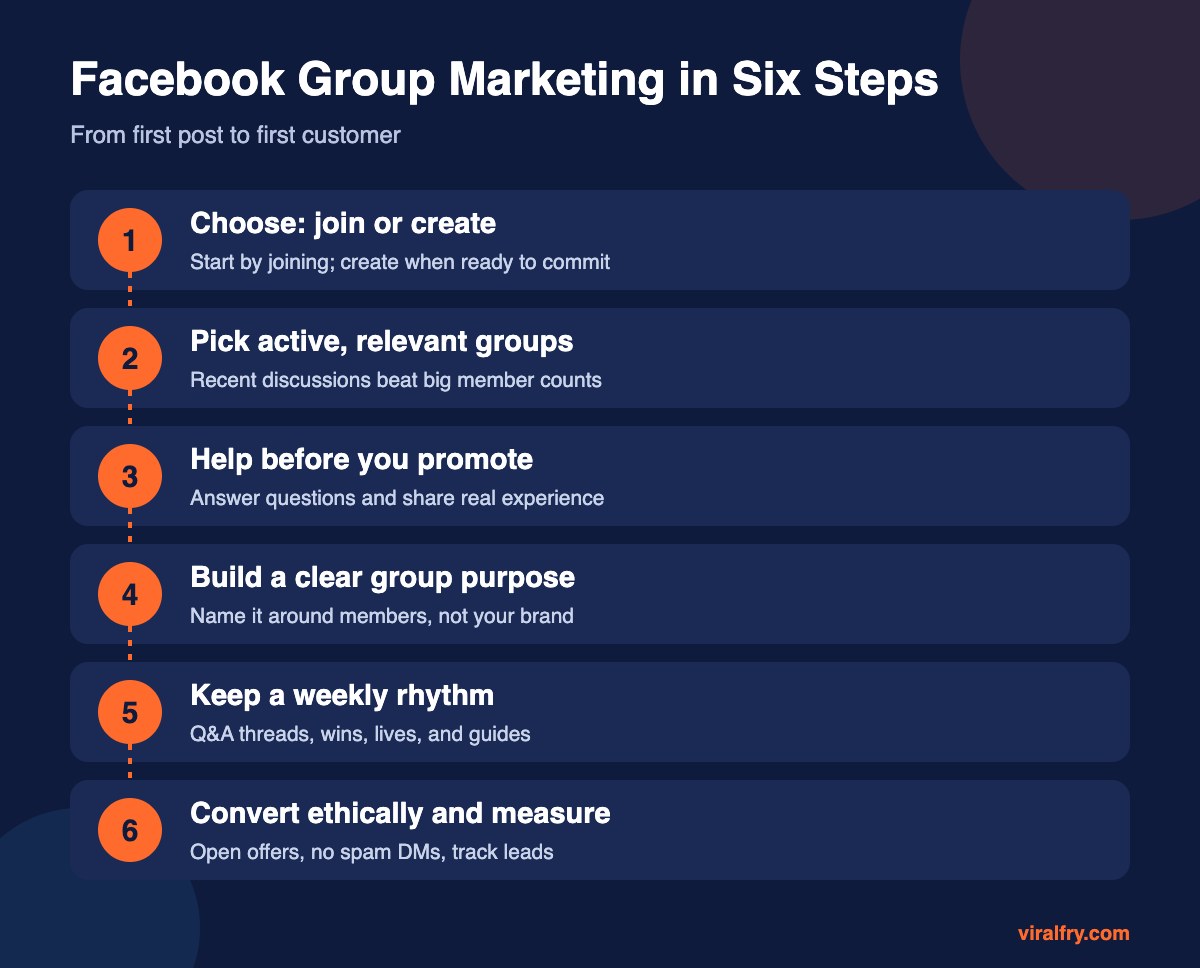
To use Facebook Groups for marketing, join active groups where your customers already gather and help them before you ever promote, or create your own group around a topic your audience cares about. Seed early discussions, keep a weekly content rhythm, use lives and guides, moderate actively, and turn members into customers through open, helpful offers rather than spam. Groups work best as a long-term community, not a broadcast channel.
Organic reach on Facebook Pages has been low for years, but Groups are different. People join them on purpose, check them often, and ask real questions. For local businesses, coaches, agencies, and niche ecommerce brands, a good group can become one of the most reliable sources of warm leads.
How Do You Use Facebook Groups for Marketing Step by Step?
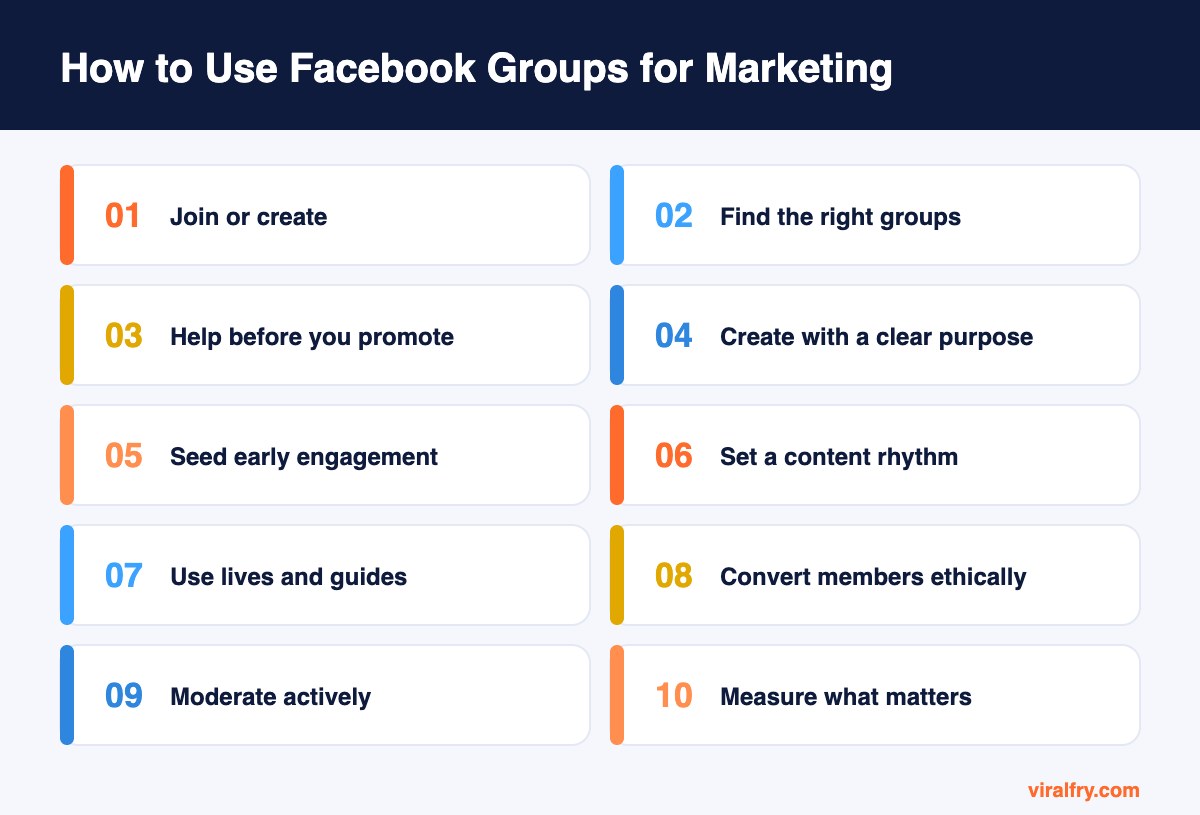
1. Decide whether to join groups or create your own
There are two ways to use Facebook Groups. You can join existing groups where your customers already gather and contribute helpfully, or you can create your own group around a topic your audience cares about.
Joining is faster and costs nothing but time. Creating your own builds a long-term asset, but it takes months of consistent effort before it becomes active.
2. Find the right groups
Search Facebook for your topic, industry, and city. Look for groups with recent posts, real discussions, and clear rules, not just member count. A 2,000-member group where people actually talk is worth more than a 100,000-member group full of spam.
Read the rules carefully. Many groups ban promotion entirely or allow it only on certain days.
3. Lead with help, not promotion
The fastest way to get removed from a group is to post links to your business in your first week. Instead, answer questions thoroughly, share useful experiences, and comment on others’ posts.
Over time, members start recognizing your name and checking your profile. That is where your business details should be, so make sure your personal profile clearly states what you do.
4. Create a group around a clear purpose
If you start your own group, name it around the member’s interest, not your brand. “Startup Founders: SEO and Growth Q&A” attracts more people than “Viral Fry Community.” Write a short description, clear rules, and membership questions that filter out spammers.
Link the group to your Facebook Page so it shows your business connection.
5. Seed engagement in the early weeks
New groups feel empty, which discourages posting. Invite customers, colleagues, and friends who genuinely fit the topic, and post discussion starters daily for the first month: questions, polls, quick tips, and “introduce yourself” threads.
Reply to every comment quickly. Early momentum matters more than early size.
6. Set a content rhythm
Consistent themes make groups easier to run: a weekly Q&A thread, a “wins of the week” post, a monthly expert live session, and occasional resources. Members learn when to show up.
Mix your own posts with member-led discussions so the group does not feel like a broadcast channel.
7. Use lives, guides, and events
Facebook Groups support live video, events, and organized content sections. A monthly live Q&A or workshop gives members a reason to stay and often brings your most engaged leads.
Turn your best answers into pinned guides so new members find value immediately.
8. Turn members into customers ethically
Never spam members with direct messages. Instead, offer value openly: free audits for a few members, exclusive resources, or early access to events. Members who see you help consistently will ask about your services.
Make it easy by mentioning your offer in the group description and occasional announcement posts, within your own rules.
9. Moderate actively
Spam, self-promotion, and arguments kill groups quickly. Use admin tools and keyword alerts, approve posts in the early stages, and remove rule-breakers consistently.
Recruit trusted members as moderators once the group grows.
10. Measure what matters
Use Group Insights to track active members, post engagement, and growth. Track business outcomes separately: inquiries, leads, and customers who mention the group.
A small, active group that sends a few qualified leads each month is a success.
Should You Join Groups or Create Your Own?
| Join existing groups | Create your own group | |
|---|---|---|
| Speed | Fast; audience already there | Slow; months to build activity |
| Control | Follow others’ rules | You set the rules |
| Effort | Regular helpful participation | Daily content and moderation early on |
| Long-term value | Reputation in others’ communities | An owned community asset |
| Best for | Testing and early lead generation | Brands ready to commit long-term |
Many businesses do both: they participate in a few established groups and slowly build their own.
What Mistakes Get You Banned From Facebook Groups?
- Posting links or ads in your first few days
- Copying the same promotional post across many groups
- Sending unsolicited sales messages to members
- Ignoring group rules on promotion days
- Arguing with members or admins in public
How Do Facebook Groups Fit Into a Wider Social Strategy?
Groups work well alongside other channels. Share your best group discussions as content ideas for your blog and Instagram, invite email subscribers to join, and promote events across platforms. Our guides to the best times to post on social media and making money on social media cover the wider picture.
What Does a Healthy Business Facebook Group Look Like?
Picture a group for small business owners learning local SEO, run by an agency. It has about 1,500 members, but what matters is that 20 to 40 people post or comment each week. Every Monday there is a “share your Google Business Profile for feedback” thread. On Wednesdays the admin posts a short tip with a screenshot. Once a month there is a 30-minute live Q&A, and the recording is saved in a guides section.
Members help each other, not just the admin. Promotion is limited to a monthly thread where members can share their own services. The agency never sends cold messages, yet several members each month ask about paid help because they have seen the quality of advice for weeks. That is the goal: trust first, business second.
Key Takeaways
- Groups offer engaged, intentional audiences that Pages struggle to reach.
- Help first; promotion comes later and within the rules.
- Name your own group around members’ interests, not your brand.
- Keep a weekly rhythm and moderate actively.
- Convert members with open, valuable offers, not spam.
Frequently Asked Questions
Are Facebook Groups good for marketing?
Yes, when used as communities rather than ad channels. Groups give businesses direct access to engaged people who joined because they care about a topic.
Can I promote my business in Facebook Groups?
Only within each group’s rules. Many groups ban self-promotion or allow it on specific days. Helpful participation is usually far more effective than direct promotion.
How do I grow a Facebook Group?
Invite people who genuinely fit the topic, post discussion starters daily at first, reply quickly, link the group to your Page, and promote it through email and other social channels.
How long does it take to build an active Facebook Group?
Most groups need two to six months of consistent posting and engagement before members start creating discussions on their own.
Add as Preferred Source