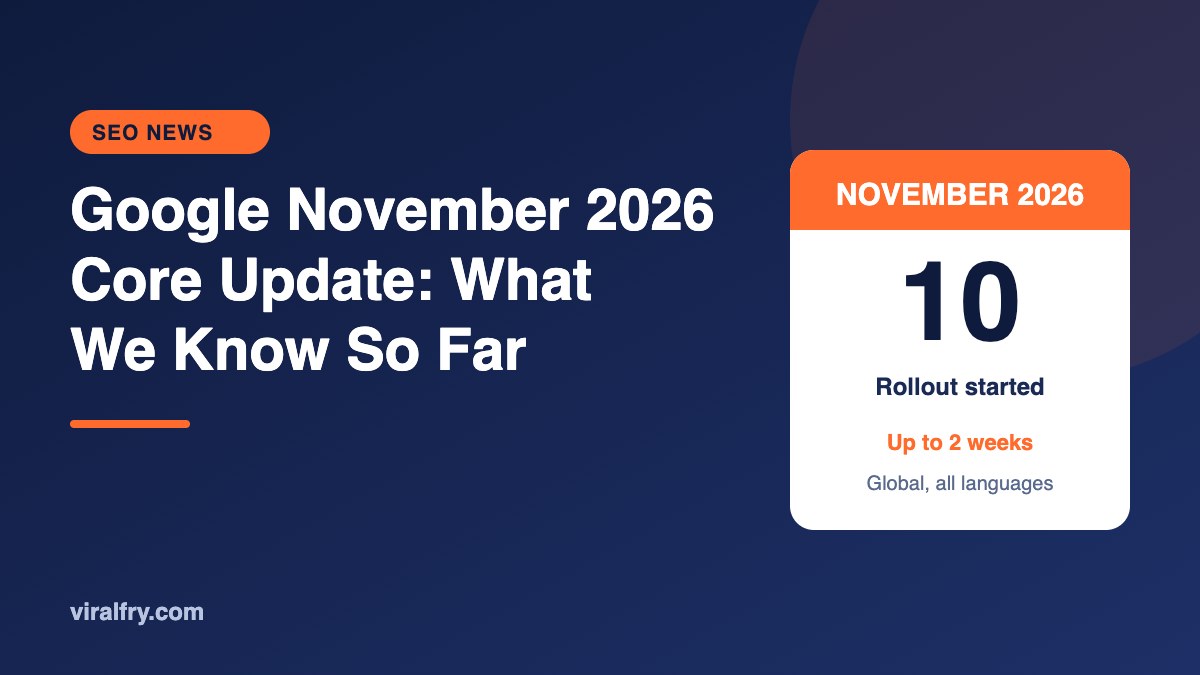
Google started rolling out the November 2026 core update on Tuesday, November 10, 2026, at about 10:06 a.m. Pacific time. Google says the update applies globally and to all languages, and the rollout may take up to two weeks to complete, which points to a finish around November 24. It is the third core update of 2026, after the March and May core updates.
If your rankings or traffic have moved over the past week, this is the most likely reason. Here is what Google has confirmed, how this update fits into the year, and what we recommend doing while it rolls out.
What Has Google Said About the November 2026 Core Update?
Google announced the update on its Search Status Dashboard and on LinkedIn. It described it as a “regular update designed to better surface relevant, satisfying content” for searchers from all types of sites. Google did not list specific targets or new ranking factors, which is normal for core updates.
- Start: November 10, 2026, around 10:06 a.m. PT
- Scope: global, all languages
- Expected duration: up to two weeks
- Official source: the Google Search Status Dashboard
Google says it will update its ranking release history when the rollout is complete. At the time of writing, the update is still rolling out.
How Does This Update Fit Into 2026?
This has been a busy year for Google ranking changes. According to the Search Status Dashboard and industry coverage, Google has confirmed three core updates and several spam updates in 2026:
| Update | Dates |
|---|---|
| March 2026 core update | March 27 to April 8 |
| May 2026 core update | May 21 to June 2 |
| June 2026 spam update | June 24 to 26 |
| August 2026 spam update | August 18 to 21 |
| September 2026 spam update | September 24 to October 8 |
| November 2026 core update | Started November 10, rolling out |
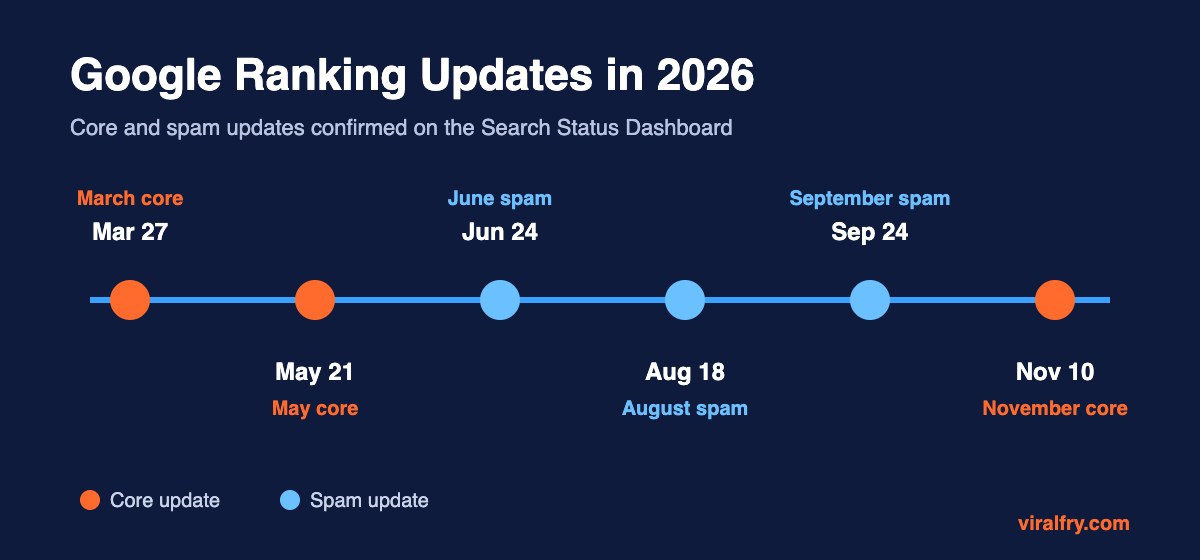
Because spam updates and core updates do different jobs, it helps to know which one hit you. Spam updates target sites that violate Google’s spam policies. Core updates reassess how well content meets search intent and quality expectations across the web. For context on the August changes, see our coverage of Google’s August 2026 spam update.
What Are SEOs Seeing So Far?
Search Engine Roundtable reported noticeable ranking movement in the days around the launch, and several rank tracking tools showed elevated volatility. Early swings during a core update are common and often settle or reverse before the rollout ends, so it is too soon to draw firm conclusions about which types of sites won or lost.
What Should You Do During the Rollout?
- Do not make big changes yet. Rankings can move up and down several times during a rollout. Reacting mid-update makes it hard to know what caused what.
- Mark the dates. Add an annotation for November 10 in your analytics and reporting so you can separate update effects from other changes.
- Wait for completion before analyzing. Google’s guidance is to wait until the rollout finishes, then compare performance at least a week after completion with a similar period before it started, such as November 3 to 9.
- Check technical health anyway. Confirm that nothing else broke, such as an accidental noindex or a site release. Our guide to technical SEO issues covers the checks.
- Keep publishing helpful content. Continue your normal plan rather than pausing everything.
If You Lose Traffic, How Should You Respond?
Core updates are not penalties. Google’s core updates documentation explains that pages can drop without doing anything wrong, because the system is reassessing how all content compares. If you see a lasting decline after the rollout completes:
- Identify which pages and queries lost clicks in Search Console, rather than looking only at sitewide totals
- Compare your pages with the ones that now rank above you: depth, accuracy, first-hand experience, and how directly they answer the query
- Improve or consolidate thin and outdated pages; a content audit helps
- Strengthen author information and trust signals, especially on YMYL topics
- Be patient. Some recoveries only show after a later core update
If your losses look sitewide and dramatic, also review the most common causes in our guide to SEO mistakes that kill rankings.
Does the Core Update Affect AI Overviews and AI Mode?
Google has said its AI search experiences draw on its core ranking systems, so changes in how pages rank can also affect which sources appear in AI Overviews and AI Mode. Track both your rankings and your citations in AI answers for key queries over the coming weeks. Our guide to getting cited in AI answers explains what helps.
Key Takeaways
- Google began rolling out the November 2026 core update on November 10, 2026.
- It applies globally and to all languages, and may take up to two weeks.
- It is the third core update of 2026, after March and May.
- Avoid major changes until the rollout completes, then compare before and after periods.
- Core update drops are not penalties; focus on content quality and intent match.
Frequently Asked Questions
When did the Google November 2026 core update start?
It started on November 10, 2026, at around 10:06 a.m. Pacific time, according to the Google Search Status Dashboard.
How long will the November 2026 core update take?
Google says the rollout may take up to two weeks to complete.
Is a core update a penalty?
No. Core updates reassess how well content meets search needs. Pages can lose rankings without violating any guidelines.
What should I do if my traffic dropped?
Wait until the rollout is complete, then analyze which pages and queries changed, compare your content with the pages that now rank higher, and improve quality and relevance where needed.
We will update this article when Google confirms the rollout is complete.
Add as Preferred Source